

“I always know the last line of my novels before I write the first one.
It’s the first line that makes me tremble.”
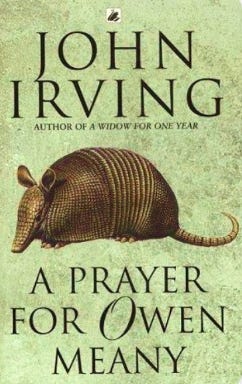
It was the opening line of John Irving’s A Prayer for Owen Meany that sealed my fate as a reader—a serious one.
“I am doomed to remember a boy with a wrecked voice—not because of his voice, or because he was the smallest person I ever knew, or even because he was the instrument of my mother’s death, but because he is the reason I believe in God.”
Reading it today still racks my nerves. As the narrator promised, Owen has never left my consciousness.
In a sense, I’d always been “a reader”—staying up late with Hardy Boys mysteries or leafing through Reader’s Digest for jokes to impress adults. Even my textbooks pulled me in; I rarely drifted off to sleep without a book propped open beside me.
But Owen Meany struck a deeper chord. It was the first book that I was devastated to finish–the first to make me cry, and later, to make me confront my own values. It lit a spark of intellect in my teenage mind that made the obligations of school feel suddenly small, and the world suddenly vast.
I was assigned the reading, but somewhere along the way, I began to read it for myself.
By the end, a book about a strange boy with an armadillo on the cover had changed my life. It started with those first fifty words—and a budding understanding that some beginnings never really end.
Reading Like a Writer
What I felt back then, though I couldn’t have named it, was the subtle power of an opening line—the way a few sentences could hold the weight of an entire worldview.
As literary theorist Jonathan Culler noted, great openings do more than “open” stories — they teach us how to read them.
When we point that out, we can accomplish a lot. Reading Reconsidered writes,
“When students attend closely to how a text is built — the words, structure, and choices — they begin to read like writers.”
Once students start to read like writers, they begin to notice the deliberate design of a text. Focusing those noticings help students to see the opening lines as both an invitation to engage and an instruction manual on how to proceed.
“Knowledge builds on knowledge. Each text we read should prepare us for the next — strengthening the web of understanding that makes comprehension possible.”
- Student Achievement Partners

Learning to See What’s There 🌌
Authors face a monumental task in those early pages: to establish characters, spark conflict, build a world, and hint at the story’s deeper truths.
I love this line from George Saunders on all that an opening has to accomplish:
“The opening has to be like a compressed moral universe. Everything that matters will already be implicit in it.”
That’s solid advice for writers, but it’s also an important insight for nascent readers.
Recognizing that compression—and slowing down enough to unpack it in class—has major implications for how well kids comprehend and connect with a novel for the rest of the unit.
How We Lose Readers
Even brilliant writing can fall flat without guidance. I learned this the hard way from my AP Literature teacher, who believed “rigor” more or less meant letting us fend for ourselves.
His lectures were lofty, his questions mostly rhetorical, and our discussions often stalled into a puzzled silence.
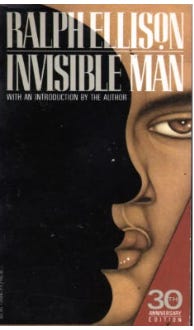
The limits of that laissez-faire approach came into focus when we encountered the opening lines of Ralph Ellison’s dazzling Invisible Man:
“I am an invisible man. No, I am not a spook like those who haunted Edgar Allan Poe; nor am I one of your Hollywood-movie ectoplasms. I am a man of substance, of flesh and bone, fiber and liquids — and I might even be said to possess a mind. I am invisible, understand, simply because people refuse to see me… When they approach me they see only my surroundings, themselves, or figments of their imagination — indeed, everything and anything except me.”
Along with my classmates, I drifted through the page—and eventually the novel—unaware of the message and out of sync with the narrator.
What did I miss? The gap wasn’t vocabulary—ectoplasms was the only unfamiliar word, and you can go without it. Nor was it complexity; Beloved, for example, had been harder, and we’d risen to the challenge—with gusto—under the guidance of a different teacher.
I would argue that a simple thing held us back: no one guided us through the novel’s opening paragraph.
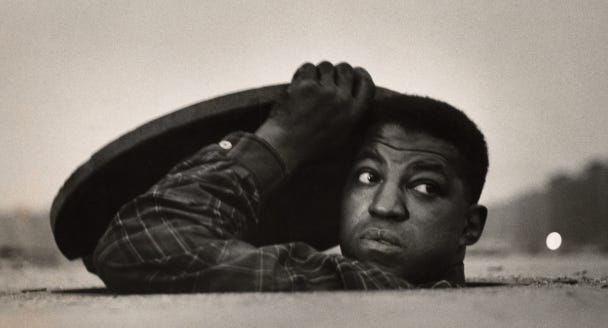
In retrospect, that paragraph doesn’t just introduce a narrator; it contains the novel’s entire thematic heart in miniature. Every image, allusion, and syntactic turn gestures toward the narrator’s central struggle.
By the end of that single paragraph, readers already hold clues to the novel’s themes:
the tension between visibility and erasure
the intersection of identity and perception
the self as a mirror of others’ perceptions
If you don’t slow down to hear those notes when they’re first played, it’s easy to see the narrator as only a madman raving in the dark. From there, you drift—confused, unmoored, and miserable through a masterpiece.
That’s exactly what happened to us.

Cracking the Comprehension Code
So what are the lessons for us to help prepare students to meet the demands of their own challenging texts? Two simple interventions in the first days of a unit can make all of the difference:
1️⃣ Lay the Groundwork with Background Knowledge
For many students in the middle grades, a novel’s first chapter isn’t just the start of a story—it’s their first encounter with an entire genre.
The Giver may introduce dystopia; Esperanza Rising, magical realism; Animal Farm, allegory; Night, memoir.
Each of these “firsts” demands more than enthusiasm; they require background knowledge of the author, era, or theme to prepare students for the world they’re about to enter. Simply “launching” into Night, for instance, without grounding in the Holocaust, would be disastrous.

Some texts demand more groundwork than others, but all benefit from context. Studying the Russian Revolution before beginning Animal Farm is an obvious move.
The Giver, though, is subtler — its world unfolds slowly, with a quietly unsettling logic. Reading a short dystopian story like Vonnegut’s Harrison Bergeron first can help students navigate the warning signs with firmer footing.
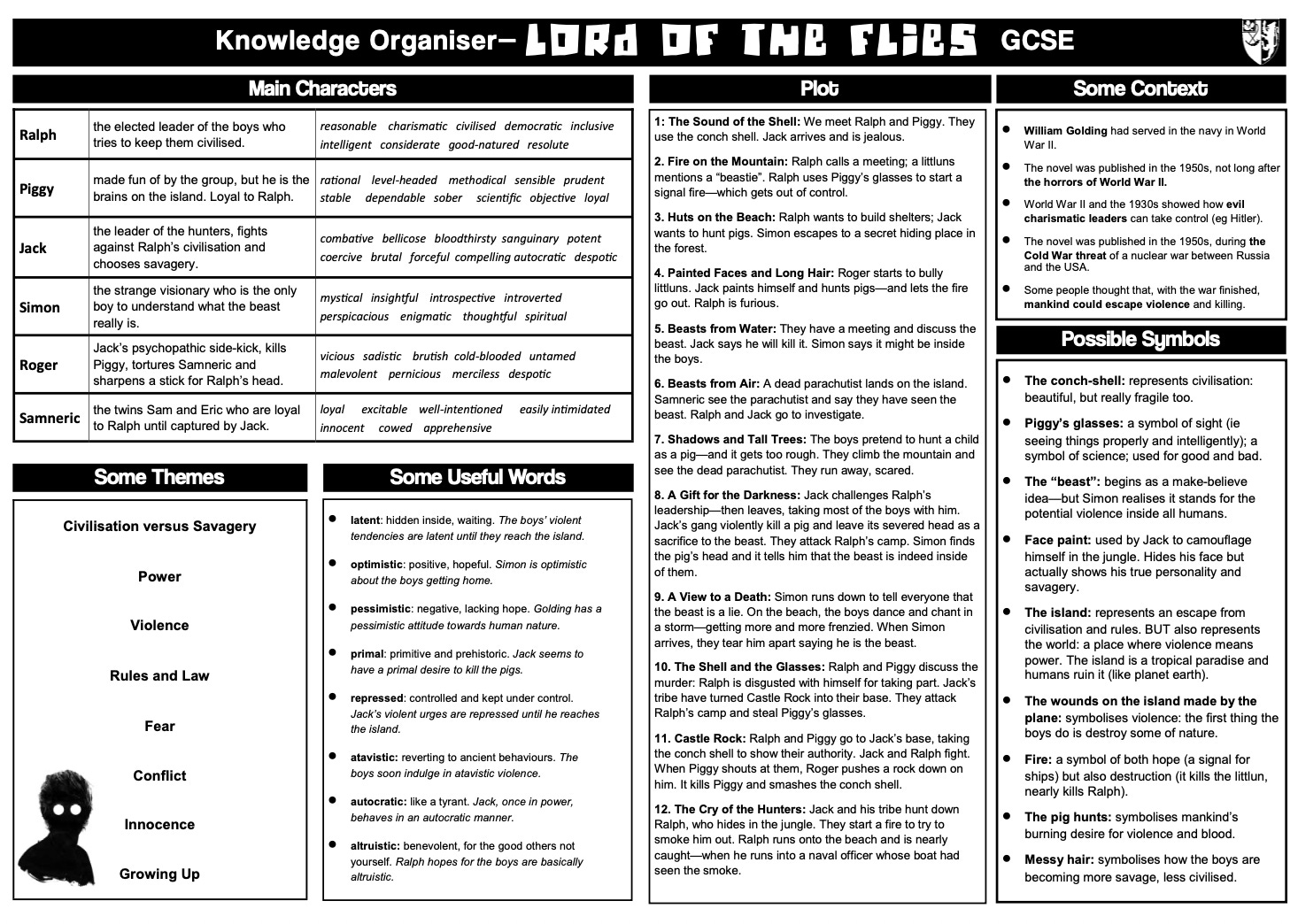
Knowledge organizers and pre-reading artifacts — a map, a timeline, a photo set — are among the most useful tools to shrink the cognitive distance between the reader and the world they are about to encounter.
“Knowledge is the residue of thought. The more the reader has to draw upon, the more connections can be made — and meaning constructed.”
—Timothy Shanahan
2️⃣ Model Reading to Make Thinking Visible
A mentor1 shared a brilliant line from Kelly Gallagher that stays with me:
“The teacher is the best writer in the room (that’s you and me); therefore, it is critical that the best writer in the room models the confusion, the messiness, the stopping and starting, the hesitation that comes with trying to compose.”
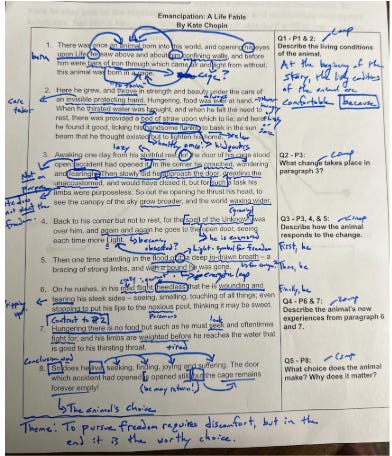
In a reading classroom, the same principle applies. You are the best reader and thinker in the room—so let them watch your mind at work.
Use your document camera to illustrate the process of thinking: pausing, wondering aloud, underlining, doubling back. Demonstrate early and often how readers struggle productively when the meaning begins to layer and the language thickens.
By playing in “real time” with a text, you’ll uncover dozens of small moves and considerations that you make instinctively—things that might never otherwise occur to you to name for students.
And after a few rounds, you’ll begin to notice (with deserved satisfaction) that their thinking starts to mirror your own. 📝
For more on the “how” and “why” of annotation, and why I always choose paper over tech:


A Case Study 📖
All of this takes time, but there’s a real payoff on the line.
Consider this excerpt from the opening of Natalie Babbitt’s Tuck Everlasting:
The road that led to Treegap had been trod out long before by a herd of cows who were, to say the least, relaxed. It wandered along in curves and easy angles, swayed off and up in a pleasant tangent to the top of a small hill, ambled down again between fringes of bee-hung clover, and then cut sidewise across a meadow… On the other side of the wood, the sense of easiness dissolved. The road no longer belonged to the cows. It became, instead, and rather abruptly, the property of people.
In class, you might do three rounds of annotations:
Read for surface meaning, fluency and implicit vocabulary.
Reread to notice how words and phrases like ambled, curves, ‘pleasant tangent’, and ‘easiness dissolved’ shape mood and tone.
Read again for pattern and interpretation — the road’s personality, the contrast between nature and “the property of people,” etc.
That deliberate pacing helps students internalize and digest the text’s logic in manageable chunks. As their fluency with character, setting, and language builds, so does their capacity for deeper insight and, importantly, far greater independence.
That “payoff” becomes clear in Tuck Everlasting: the winding road functions as a vivid metaphor for what’s to come—its curves, contrasts, and sudden turns foreshadow the moral terrain of the book itself.
A careful read of the opening becomes a rehearsal for everything that follows, teaching students not just how to analyze a paragraph but how to enter the story.

Cultivating Astonishment 💫
“Instructions for living a life: Pay attention. Be astonished. Tell about it.” - Mary Oliver

When we teach patient, attentive reading, we uncover one last thing for our students—the staggering beauty of what’s already on the page, hidden in plain sight.
Openings matter, so treat them like art.
Show students how the smallest brushstrokes of craft can reveal the whole design, leave them in awe at the precision and beauty of the language, and give them just enough thread to grasp until their curiosity sparks and does the rest.
Make them tremble, and they’ll never read the same way again.
That mentor is my colleague Anne Sulsky, an accomplished writer and one of the best teachers I know. You can find excerpts from her book on teaching writing at her Substack. It’s worth your time.